Showing posts with label zhen international. Show all posts

Saturday, September 15, 2012

What Is Your Interpretation of the Proverb, A Rolling Stone Gathers No Moss?


This is a controversial proverb. Generally it means that the people who change their occupations often do not obtain a particular professional skill. The other interpretation is that people who pursue new challenges never get old and dull, but stay young and fresh. We have never known a proverb that has such different interpretations. The Japanese version of this proverb, in its negative form, is same as the English version. Most likely, the Japanese version was translated from the original English. The version with a positive meaning in Japanese is, "When the stream of a river is fast, the water does not go bad."

Hanako was a dreamer. She had many dreams. She wanted to be a window decorator. She hoped to have a job in a Web creation business. Sometimes she thought simply marrying a person whom she loved would not be a bad idea. She graduated from college and started working as a secretary for an executive in an electronics company. She liked her job, but she could not give up her dream of having a creative job. To this end, she attended design school after work.

Hanako had a friend named Minori. She did not consider herself clever. After finishing her study of English literature, Minori continued to study English, and became an English-Japanese translator. Her translation speed was not fast, but she worked with attention to detail and made few mistakes. She did not take more work than she could handle, but for the jobs she did take, her translations were detailed and thorough. She gradually became popular. She began getting offers for jobs in the academic translation field.

As a one of the leading professionals of the age, Minori was interviewed by a TV program. Hanako watched Minori receive VIP treatment in the program and envied her. Hanako had been unable to get a creative job. She had changed her job several times. She found herself lacking professionalism in many things. Well, she thought, if nothing works, I will find a partner and marry him.

Minori did not look very pretty on TV. She was wearing a dark-colored suit like a man would wear. Her suit was dark gray and did not match her shirt. Her hair was not well styled; it was just tied back on her head. Hanako thought herself more attractive than Minori.

Which woman do you find more attractive? The bottom line is that everybody is different and everybody is attractive, as long as they live their lives to the full extent.


Read this Article in EzineArticles.com:

http://EzineArticles.com/5787807


It's NEW!  It's exciting!!  It brings you the result!!!  Web Traffic Toolbox!!!

http://webtraffictoolbox.com/



Check my websites to find out what I am doing:


http://vur.me/shawfunami/me

http://vur.me/shawfunami/zi


Feel free to contact me:

shaw@zhenintl.ws

Shaw Funami

Fill the Missing Link


Stumble Upon Toolbar

Sunday, August 12, 2012

Empress Consort Jingu, the Dragon Queen


Queen Jingu (170 - 269) was the first Queen appears in Japanese original history books. "Nihon Shoki" and "Kojiki" are 2 oldest Japanese history records. Both carry articles on Queen Jingu. According to the records, Yamato (later became unified Nippon) government was in the civil war, in the process of unifying Japan in the second and third centuries. Emperor Chuai, Jigu's husband, was leading Yamato troops fighting against a tribe in Kyushu Island. The Empress Consort Jingu was pregnant but accompanied her husband as one of generals of Yamato army. When her husband died in the middle of the war, the empress consort Jingu decided to take over her husband vision and continue to fight.

Her army won the civil war in Kyushu Island and she led her army to Korea against all the objections from her subjects. This was first Japanese aggression to Korea in the world history. It was the first time Japan appeared in the history of Far East Asia as an aggressor. It was unfortunate that this war was purely aggression of Japan. However, it helped to redefine Japan as one of the powers in Far East Region opened Japanese cultural exchange and trading with the Eurasia Continent. The tie with Continental Culture helped Japan to modernize its culture, society, and politics from prehistoric characteristics.

Still Jingu was not the empress. She gave birth to a boy baby, who later became Emperor Ojin. In her way back to her palace from the war with her newborn baby, she found that her nephews' rebellion army stopped her to come back in attempting to become the next emperor. In accordance with her legend, she stopped her soldiers who wanted to fight against traitors. She invited her nephews and generals of rebellion army, telling them that she had no intention of fighting. Instead, she wanted to surrender if it helped the peaceful solution. When her nephews came for peace talk, Jingu killed them and declared that she would not kill rebellion army's generals and soldiers if they agreed to surrender.

She appears to be a cruel woman who attacked Korea and killed her own nephews to be an empress. She obviously had an international sense opening up the door to the continental culture for bringing up her country to the next level. It was also not uncommon that the royal family's brothers and sisters killed each other, for getting to the highest position in a history of any country. Nobody should blame Empress Jingu just because she was a woman and killed her family members for her government stability.

Instead, it is noteworthy that this determined and powerful queen drove her own country one step closer to the unified Japan and opened the door to the next level culture and society. There is no record that she officially became an empress. Thus, Japanese history calls her Empress Consort Jingu, not Empress Jingu. Japanese history remembers her and respects her as the Dragon Queen.


Read this Article in EzineArticles.com:

http://EzineArticles.com/5501835


It's NEW!  It's exciting!!  It brings you the result!!!  Web Traffic Toolbox!!!

http://webtraffictoolbox.com/


Check my websites to find out what I am doing:


http://vur.me/shawfunami/me

http://vur.me/shawfunami/zi


Feel free to contact me:

shaw@zhenintl.ws

Shaw Funami

Fill the Missing Link


Stumble Upon Toolbar

Sunday, August 5, 2012

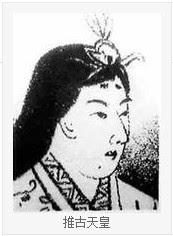
Empress Suiko, the Founder Empress of Constitutional Government


Late sixth century and early seventh century were a period of paradigm shift for the early history of Japan. Justice was power earlier than this period in Japan. The Imperial family of Japan also obtained and stabilized its power using military force. They defeated many local tribes and formed unified Japan. When Empress Suiko (554 - 628) became the highest ruler position of Japan, most of Japan was under control of Yamato government. As they did not have any enemy country that was an immediate threat to Yamato government, higher position aristocrats and imperial family member were fighting for political power.

Yamato government needed new concept to reign peaceful Japan. Empress Suiko appointed Prince Shotoku as her regnant. Prince Shotoku decided to introduce constitutional government system from China and sent his mission to then Chinese emperor. Based on the knowledge and experience from the people sent to China, Prince Shotoku could establish the twelve official ranks for modernization of Yamato government. He promulgated Seventeen-articles constitution. Prince Shotoku successfully modified his government to be modern, centralized, and constitutional, based on the concept and knowledge introduced from China. Noteworthy is the fact that he could accomplish this modernization despite all power struggles in Imperial Palace in Japan, at that time.

Prince Shotoku took all the credit for modernization of Japan in the seventh century including promulgation of the very first constitution of Japan. It might not have been possible that Prince Shotoku achieved establishment of the first central government by himself in the midst of bloodshed power struggle. Empress Suiko must have given full support to her regnant to realize modern central government.

Quite unfortunately, there is no record to show how Empress Suiko supported Prince Shotoku. However, in the period when just survival was not easy, Empress Suiko must have been a determined and strong-minded lady. There is a myth, which tells what kind of person Empress Suiko was. According to the legend, Umako, who was the head of the most powerful political family, at the same time, uncle of the queen wanted her to approve ownership of a royal land. The empress rejected her uncle's request. She said royal land belonged not just to royal family, but also to the people. She continued that Japanese people would have hated them both, if she accepted his request of giving people's property to him, all because she is the empress and he was her uncle and the leader of the most powerful clan.

She does not appear much in official records, but she must have been quiet but strong leader in the paradigm shift age.


Read this Article in EzineArticles.com:

http://EzineArticles.com/5514324


It's NEW!  It's exciting!!  It brings you the result!!!  Web Traffic Toolbox!!!

http://webtraffictoolbox.com/


Check my websites to find out what I am doing:


http://vur.me/shawfunami/me

http://vur.me/shawfunami/zi


Feel free to contact me:

shaw@zhenintl.ws

Shaw Funami

Fill the Missing Link


Stumble Upon Toolbar

Friday, May 11, 2012

Self-Employed and Being Employed


When one stayed in the same environment, he got so much used to it that he took it granted. It would be okay if one kept staying in the environment. If, for any reason, one needed to get out of his long-stayed environment, he would get lost for various things. It is true in a working environment. If one were working in an office of relatively large organization, he would take it granted for some certain things, which his organization provided. He would lose supporting function. If he was in sales department, he had marketing, accounting, finance, delivery, and, in many cases, technical support from his company.

If he decided to go for his own business and resigned his organization, he is not quitting his company. He is quitting these supports, too. One gone independent sometimes found him to get lost, losing all supports he used to get. In his office, someone else planned, drew, and printed, and brought his own company brochures so that he could give them to his clients. Being independent, he needs to prepare a media, even not a brochure, which explains who he is and what he does. Somebody else used to take copies for him when he needed them. He needs to take his own copies after his independence. Papers! Who prepare papers for his copies? He needs to do it.

Facing a difficult client, he had office fiends, who he could discuss the situation. He now needs to consider and decide his action by himself. One needs to be careful on his mental situation in dealing with this change of environment. There are people who are depressed with these changes. Some may become even sick.

There was a real estate agent who went independent quite recently. He used to work in a good and wide office. He did not have to worry about who run his financial. He had support to do basics for him. His assistant took copies and stapled documents so that documents were ready for submitting to his clients.

He needed to take his own copies and stapled his documents for his clients. He could not invite his clients to her office, because his office was simply his garage room. He did not get depressed. He thought he should play smart. He tried to use resources of others as much as he could. There were several related people with his deals, such as banks, title companies, financial institutions, and agents from his counterpart, sometimes buyers' or sometimes sellers'. Oh, yes, he should not forget about his clients. His clients are prestigious people, since they are the ones who buy and sell properties. They had resources this independent real estate could use. He started to use PC in his client's home. He took his copies, using printers they had. He emailed documents and asked recipients to print. Gradually, this agent started to lose trust from his clients. These seem trivial things. However, human relationship could be harmed from small things. These are the ones, which people gone independent, should pay attention.


Read this Article in EzineArticles.com:

http://EzineArticles.com/5578781


It's NEW!  It's exciting!!  It brings you the result!!!  Web Traffic Toolbox!!!

http://webtraffictoolbox.com/


Please also take a look at my Traffic Solution, which is now a part of my Internet Business Toolbox.

http://thetrafficsolution.com/aff/1206


Click here to get The Traffic Solution


Check my websites to find out what I am doing:


http://vur.me/shawfunami/me

http://vur.me/shawfunami/zi


Feel free to contact me:

shaw@zhenintl.ws

Shaw Funami

Fill the Missing Link


Stumble Upon Toolbar

Sunday, April 8, 2012

Psychological Barriers


When one challenges something new, there are many difficulties and obstacles he needs to overcome. If one is starting own business, the list of action items is miles long. What should be the trade name of his company? What products or services the company is engaging? Where can he get the money? How shall he spent the money? How many employees shall he hire? He cannot list them all. In exact meaning, they are not difficulties or obstacles. Those are action items. His mental obstacles might be bigger than those exciting action items.

He doubts if he is making a right decision. He fears if he fails. He worried what is their family or friends reaction. He worries if he can get enough money. He worries if he could develop the products he wanted. His worries are endless.

Although he can worry about almost everything, there are only 3 significant psychological barriers for his challenge:

Add caption
1. Fears for new decisions
2. Objections from friends and families
3. Middle of success obstacles

No matter what one is trying to do, the first large barrier to prevent one to start is himself. He thinks it is a terrific idea. He thinks it works. However, he cannot be sure. He cannot be confident to make it happen. He first needs to address his fear based on himself.

Second psychological barrier is one's family and close friends. When he talks with his family and close friends, 95% of the people show opposition to what he wanted to do. Because they are his family and close friends, he will be strongly influenced. Some objection comes with emotional background. It can depress the one, even.

Last barrier is the hardest for one to overcome. After a while, he could come over those barriers. He started his business. He struggled for a while. He made all the effort. Finally, he was leading the business successfully. He was happy and satisfied. He would be ready for the next challenge. Then, something happens. It is almost always something terrible. For example, your trusted accounting colleague ran away with your money. Your engineering key person got seriously sick and would not be able to come back to work. He could be sick and would not be able to work for next 3-4 months.

Even for people who could successfully overcome the first and second barrier, it is not easy to come over the last obstacle. It happens with serious emotional impact because it happens in the middle of the smooth operation. Unfortunately, however, it will happen. The one needs to be prepared for this difficulty and ready to cope with it.


Read this Article in EzineArticles.com:

http://EzineArticles.com/5337330


It's NEW!  It's exciting!!  It brings you the result!!!  Web Traffic Toolbox!!!

http://webtraffictoolbox.com/


Please also take a look at my Traffic Solution, which is now a part of my Internet Business Toolbox.

http://thetrafficsolution.com/aff/1206


Click here to get The Traffic Solution


Check my websites to find out what I am doing:


http://vur.me/shawfunami/me

http://vur.me/shawfunami/zi


Feel free to contact me:

shaw@zhenintl.ws

Shaw Funami

Fill the Missing Link


Stumble Upon Toolbar

Sunday, March 25, 2012

Legend of California Gold Rush


All the states in US have nicknames. New York is Empire State. New Jersey is Garden State. California is Golden State. Its nickname came from the California Gold Rush in the history of US. California Gold Rush started on January 24, 1848, when a carpenter and sawmill operator, James Wilson Marshall (October 8, 1810 - August 10, 1885) discovered gold in Sutter's Mill in California. This discovery triggered more than three hundred thousand people in and out of United States of America rushed to Northern California. It set the nickname of California to be Golden State. Because the number of miners came to California reached its peak period in 1849, all minors were called "Forty-Niners". Later it became the name of San Francisco Football team.

It is about three hours drive to visit the original area of California Gold Rush. One can use Interstate 580 East, Interstate 205 East, Interstate 5 North, Route 99, and Route 88 to reach Sutter Creek. Just right before driving into the mining area, visitor can get a rest in downtown of Sutter Creek. California Gold Rush created people's movement to the West Coast and formed a period of Wild West. The downtown of Sutter Creek keeps appearance of days of gunmen.

Fifteen minutes drive takes him to the entrance of Gold Mines. The Mine is now only for sightseeing purpose. They are not digging gold any more. There are no flashy signs or Las Vegas style neon signs. However, since it is original entrance, a visitor should respect it as the testimony of the history. The gate shows "Mine Tour", but the entrance is small and old. The visitor should be careful not to overlook the entrance to the parking, since there are no direction signs to which the driver can refer.

The tour provides visitors a tram tour to the deep area of the mine. The inside of mine is lighted, but some parts are dim to be almost dark. There are area brightly lighted and have wax dolls showing days minors were working. Entering into the cave, the first thing one will see is a bird in a cage. Now in the Mine Tour, the person and the bird are imitation of wax dolls. It shows that they kept a bird to know when gas is spreading in the mine. The poor bird is the one first die to let minors know there is a danger of gas.

Although minors inside are wax dolls, they exhibit real machine tools and hardware. Many of them look heavy and awkward. Inside of the gold mine looks complicated structure. A visitor finds a deep straight down-hole after long gentle down slope continues for a distance. It shows that they did not have a specific plan of digging. They dug in the way the gold vein guided miners.

A guide tells the authority is estimating still two hundred million ounce gold lies underground. Now the visitor must answer the last question of the tour guide if he hopes to be a minor.


Read this Article in EzineArticles.com:

http://EzineArticles.com/5528888


It's NEW!  It's exciting!!  It brings you the result!!!  Web Traffic Toolbox!!!

http://webtraffictoolbox.com/


Please also take a look at my Traffic Solution, which is now a part of my Internet Business Toolbox.

http://thetrafficsolution.com/aff/1206


Click here to get The Traffic Solution


Check my websites to find out what I am doing:


http://vur.me/shawfunami/me

http://vur.me/shawfunami/zi


Feel free to contact me:

shaw@zhenintl.ws

Shaw Funami

Fill the Missing Link


Stumble Upon Toolbar

Sunday, January 22, 2012

Subtle Difference of a Word's Meaning in Different Languages


It was my wife who sponsored me to get a Green Card. Now she is helping her own mother obtain a longer stay by getting a Green Card. She is an American citizen, but she asks my advice on language of business or legal documents in English. Her English is good. She hopes to double-check her understanding with me because I have been in business with foreign countries for more than 20 years. In answering her question or discussing a meaning of a word, I found that even the officially approved and accepted English - Japanese or English - Chinese dictionaries' word selection would not be a 100% perfect match for one foreign word to the other.

It occurred to me while we were taking a look at a Green Card application form downloaded from the website of USCIS (US Citizenship and Immigration Services). It was an English word "Nationality". When one turns to an English - Japanese dictionary, one will find the Japanese word for Nationality is "Kokuseki". All the Japanese senior-high school students would properly answer this question what is Japanese word for an English "Nationality". I have never doubted it would not be 100% correct for my English education experiences for almost 40 years.

Let us take a look at a Japanese government document now. A foreigner that travels to Japan must fill in and submit an entry form. There is a column which says "Kokuseki" in Japanese on top. Turn it back; the equivalent column says "Nationality" in English. They look to have the same meaning. However, they are subtly different.

The difference would be obvious when one filled in the column. If one were Japanese, he would write in Japanese in the"Kokuseki" column "Nihon" (Japan). What about in English column? In "Nationality" column, he needs to write "Nihon-jin," Japanese.

The immigration service of any country would not reject the entry if they referred to the country from which the foreigner travelled. However, this shows in English "Nationality" does not exactly mean "Kokuseki" in Japanese. The English word "Nationality" is a word which refers to the person's citizenship. Japanese "Kokuseki", instead, refers to the country to which the person belongs.

There are several other examples. They are usually words related to words which describe people. "Niece" and "nephew" in English refer to both sides' families of a married couple. Japanese "mei" and "oi", equivalent to niece and nephew, do not refer to children of their spouse's brothers and sisters. English "Knights" is equivalent to "Bushi" in Japanese. The people who edited dictionaries recognized the difference and used different words for the English word "knight." Knight in Japanese is "Kishi," implying a warrior on a horse. Though Japanese Bushi also uses horses, they are referred to as Japanese version of knights. It may indicate the difference of the language origin. It is the cultural background. Japanese culture tends to put emphasis on land, house, or country to which individuals belong. English always put people before environment to which they belong.


Read this Article in EzineArticles.com:

http://EzineArticles.com/5748593


It's NEW!  It's exciting!!  It brings you the result!!!  Web Traffic Toolbox!!!

http://webtraffictoolbox.com/


Please also take a look at my Traffic Solution, which is now a part of my Internet Business Toolbox.

http://thetrafficsolution.com/aff/1206


Click here to get The Traffic Solution


Check my websites to find out what I am doing:


http://vur.me/shawfunami/me

http://vur.me/shawfunami/zi


Feel free to contact me:

shaw@zhenintl.ws

Shaw Funami

Fill the Missing Link


Stumble Upon Toolbar


Thursday, November 10, 2011

Think Again Before Becoming Emotional


Managing our emotions may be our lifetime work. Confucius, an ancient Chinese philosopher, said people become free from vacillation when they turn 40. Considering this advice when I look at myself, I regret that I am still resentful, fearful, and remorseful. I need to admit that my mental situation is far from free of vacillation. Some older friends tell me are even more resentful, fearful, and remorseful now. How we can manage our emotions?

Although it is not simple or easy to manage our negative emotions, as one gets older, he starts to learn some methods to repress public displays of emotion. He may have to drink to curtail his emotions in public. I found that the ways we all hide our real emotions contain some common practices. The man who needs to control his emotions follows these steps:

1. He accepts he is emotional.
2. He gets himself some time to control his emotions (at least for a while).
3. He thinks about why he becomes emotional.

Following these steps allows the man the opportunity to become calm. The first step can be the process of detaching himself from the emotional state, separating himself into two halves, the emotional half and the calm half. Then at least half of him would be able to remain calm.

The second step is not easy. Some people slowly count to five in their heads, while others go to 10. My friend said he repeats, "I am emotional. Do not show it," in his mind at least five times. This is a hard process.

I see real value in the third process. It would bridge the gap between pretending to be calm and real calm. In this step, you must consider why the other person became emotional. Why is your wife so angry? Did you tell say something that is rubbing her the wrong way? Did your boss upset you?

It helps to imagine you were involved in the process. If someone felt cheated, deceived, or mistreated, he would consider whether he played a role in your counterpart acting like that. Your wife would be angry because you made her upset. Your boss was upset because you did not do a good job.

Think again. Think about whether you are causing their upset emotions. If you understand your own involvement in making others emotional, you can see it might be reasonable for your counterpart to be upset. In this way, you calm yourself down.


Read this Article in EzineArticles.com:

http://EzineArticles.com/5847167


It's NEW!  It's exciting!!  It brings you the result!!!  Web Traffic Toolbox!!!

http://webtraffictoolbox.com/


Please also take a look at my Traffic Solution, which is now a part of my Internet Business Toolbox.

http://thetrafficsolution.com/aff/1206


Click here to get The Traffic Solution


Check my websites to find out what I am doing:


http://vur.me/shawfunami/me

http://vur.me/shawfunami/zi


Feel free to contact me:
shaw@zhenintl.ws
Shaw Funami
Fill the Missing Link


Stumble Upon Toolbar

Sunday, May 29, 2011

Which Country Is Kind to Dogs, US or Japan?


An Indoor Dog Park is opened in Japan, I have heard a while ago.  I have noticed that there is a difference of approaches to pets between US and Japan.  However, it is nice surprise to learn that Japanese attitude toward animals and pets are improving.  Although US situation for pets are not totally friendly, Japan was more or less worse.  I hope Japanese people more conscious and awaken about their pets and the animals we live with.

I have never heard that there is a dog park in Japan, but the indoor one opened recently looks nice including indoor dog run ground and cafe in which dog owners can enjoy eating with their favorite dogs.  I do not buy the admission is $10, because dog parks in here in US are free admission.  Still it is good going that some Japanese people are aware of their dogs' amusement and health.

One another thing I see a difference between Japan and US is that there is "No Wild Dog or Unleashed Dog" wondering around in cities in Japan.  Here in Hayward, I occasionally come across dogs wondering around unleashed and unattended.  If a wondering dog was found in Japan, he would be taken immediately.  It is why there is no non-attended and non-leashed dog found in Japan.  It is interesting to know that even the treatment of dogs have a difference in different countries.


It's NEW!  It's exciting!!  It brings you the result!!!  Web Traffic Toolbox!!!
http://webtraffictoolbox.com/


Please also take a look at my Traffic Solution, which is now a part of my Internet Business Toolbox.
http://thetrafficsolution.com/aff/1206

Click here to get The Traffic Solution

Check my websites to find out what I am doing:
http://vur.me/shawfunami/me
http://vur.me/shawfunami/zi


Feel free to contact me:
shaw@zhenintl.ws
Shaw Funami
Fill the Missing Link


Stumble Upon Toolbar

Wednesday, May 11, 2011

Dr Hua Tuo and a Jail Guard


There is always a point where legend or myth takes shape as the beginning of history, as if there were an overlapping period between myth and history. This transit time is rather long, longer than people often imagine. Some people lived in the transition period as legend became historically proven fact. Dr. Hua Tuo was one of these. He was a legendary physician in ancient China. His birth year is unknown; his death, according to records, was in 208 AD. He was a doctor who performed surgery in the early third century, and he was the first doctor to use anesthesia for his surgeries in China. He treated and cured several historical figures who would have died without his care. These patients include Cao Cao, the first emperor of the Wei Dynasty of the Three Kingdoms.

His name appears historical documents including the "Book of Later Han" and the "Records of Three Kingdoms". Both records are reliable sources. Historians have concluded that Dr. Hua was a genuine historical figure, but the stories about him are full of myths. For example, one story states that when he treated a general, he predicted that the general's sickness would return in 18 years. It happened, but as Hua Tuo was dead when the general was sick again, the general died because Hua Tao could not treat him. Another story tells how people believed that Hua Tuo had invented a prescription for the elixir of life.

In later life, Dr. Hua served Cao Cao, the first emperor of Wei Dynasty in the Three Kingdoms period. Dr. Hua was the only one who could ease Cao's chronic migraines. Dr. Hua eased Cao's pain whenever it occurred, but did not cure it completely. The emperor asked the doctor if he knew any way to get rid of his migraine forever. Tuo thought for a moment, and then answered that he would be able to cure the migraine, but that the cure involved surgery on the emperor's head. Emperor Cao was old and suspicious.

He did not believe the doctor could cure his migraine by cutting open his head. Instead, the emperor, Cao, suspected the doctor was trying to kill him. He put the doctor in prison and later executed him.

While the doctor was in jail, he met a young jail guard, Wu. Wu had studied medicine before becoming a jail guard. Wu treated Dr. Hua like his father during the doctor's time in jail. Dr. Hua told Wu, before his execution, that Wu could have all of his medical books after his death. Wu received Dr. Hua's entire collection, including a book describing a prescription for the elixir of life. Young Wu was glad. He resigned from his position at the jail and went home to study the doctor's books. At home, Wu found his wife burning the entire collection. He was upset and asked his wife why she was burning them. She said it did not make sense to be a general surgeon because the emperor had put Dr. Hua in jail and killed him. Hua Tuo's entire collection of medical books was burned to ashes. Nothing significant was left. This is why human beings today do not have the elixir of life.

Even though there is no elixir of life, it is unfortunate that the genius doctor's medical books were lost. However, the author understands Wu's wife's reasoning and actions. Which would you prefer: life or execution? Would you run the risk of being executed if you could be a legendary doctor?


Read this Article in EzineArticles.com:
http://EzineArticles.com/6066146


It's NEW!  It's exciting!!  It brings you the result!!!  Web Traffic Toolbox!!!
http://webtraffictoolbox.com/


Please also take a look at my Traffic Solution, which is now a part of my Internet Business Toolbox.
http://thetrafficsolution.com/aff/1206

Click here to get The Traffic Solution

Check my websites to find out what I am doing:
http://vur.me/shawfunami/me
http://vur.me/shawfunami/zi


Feel free to contact me:
shaw@zhenintl.ws
Shaw Funami
Fill the Missing Link


Stumble Upon Toolbar

Sunday, March 6, 2011

Binding Power, Ju


Have you ever felt your sixth sense sharpen as you read a book about supernatural power? I once found a book that gave me this kind of feeling. It was a book about Seimei Abe, a Japanese Shamanism master who lived for three hundred years. Myths tell that his mother was a white fox whom his father saved on a mountain. He had supernatural powers which resulted in paranormal activity in eighth century Japan. He was under the protection of the most powerful aristocrat's family. When the head of that the family was cursed, Seimei Abe gave a white dog to the leader. When evil forces tried to strike this aristocrat, the white dog became a white knight and defended the aristocrat.

Seimei Abe was a master of "Ju." The Japanese word "Ju" is generally translated "curse" or "grudge" in English. However, Seimei Abe taught that it meant "binding," and he said that anything binding is "ju." An example of something binding is a person's name. A person was given his or her name; therefore, he or she could be recognized and differentiated from others by it. On the other hand, people were more or less bound by their names. A boy, named after a great man from a history, struggles to be as great as his name. Some would become successful and honor their names, but some would fail. They were bound and profoundly influenced by their own names.

In one of his myths, Seimei Abe was called Emperor. A supernatural being stole the Emperor's guitar, they said.

Seimei Abe was called because a supernatural being was involved. The Emperor asked him to bring his guitar. Seimei went to the East Gate of Kyoto Imperial Palace, where the music of his royal guitar was heard. Two other people accompanied him-a Samurai warrior named Hiromasa and a Buddhism monk called Kan-ei. When the three of them arrived at the gate, they heard the guitar music coming from the roof of the gatehouse. Seimei approached the person playing guitar on the roof, and asked his name. It turned out he was the ghost of a deceased member of an aristocrat family who was against the Emperor. He asked for the names of the three visitors, and they told him. Seimei lied, though, saying his name was "Masanari."

A moment later, the spirit called their names one by one: "Hiromasa, Kan-ei, and Masanari." The other two answered their names, but Seimei remained silent. The ghost spelled out their names, and suddenly Hiromasa and Kan-ei could no longer move. They were bound by the spell. Seimei was not bound by the curse of the ghost. He continued to intentionally tell the ghost fake names so that he would not be bound by the spell. Seimei spelled a word to get rid of the ghost so he could take back the imperial guitar.


Read this Article in EzineArticles.com:
http://ezinearticles.com/?Binding-Power,-Ju&id=6016926


It's NEW!  It's exciting!!  It brings you the result!!!  Web Traffic Toolbox!!!
http://webtraffictoolbox.com/


Please also take a look at my Traffic Solution, which is now a part of my Internet Business Toolbox.
http://thetrafficsolution.com/aff/1206

Click here to get The Traffic Solution

Check my websites to find out what I am doing:
http://vur.me/shawfunami/me
http://vur.me/shawfunami/zi


Feel free to contact me:
shaw@zhenintl.ws
Shaw Funami
Fill the Missing Link


Stumble Upon Toolbar