Thursday, October 13, 2011

Use More Alert When Things Are Going Well


Japanese swordsmanship is called "Kendo". Among the principles and techniques in this martial art, there is one thing which a beginner must learn. It is "zan-shin" in Japanese. The literal translation of the words is "Leave Heart". It means, "Continue to be alert until you are 100% sure you finished your enemy." If you have watched any match of a martial art, you must have seen that a winner would not release his guard until he found his enemy admittedly lost, or the judge declared his victory. He is using "zan-shin". Many fighting concepts from martial arts are useful for life or business. I found this concept of alertness useful for business in general.

Koji was an owner of a software business. He needed to go through all the hardships and problems because he started his business in recession time. He called all the banks, investors, and the financial institutions. He could not find anybody who could provide him the capital he needed to start his business. He could manage to start his business collecting small amounts of money from his family and friends. He could not hire any software engineer. He designed the software all by himself. He had very good clients' contacts when he left his former employer, but they did not deal with the new and start-up company due to recession.

He had worked like crazy. The economy started to pick up, and his projects gradually brought money to his company. He hired two engineers first. He could recruit more engineers later that year. He could finally have a breathing space. His company's financials were getting better.

Koji was relaxed now. He began to leave the software development process to his engineers, and his company began to receive orders from major companies.

One day, when he was looking for an opportunity to expand his company, his phone rang. It was the vice president of general affairs, calling to tell him that their key engineer had left the company, taking with him all of his intellectual property. The engineer had started his own business, competing against Koji's company. Koji regretted that he had not paid closer attention to the behavior of his employee, but it was too late. The damage had been done. Koji tried to sue the engineer, but he did not have enough money to pursue a lawsuit. The engineer deprived Koji's company of more than half its customers and revenue.

Koji could have used the concept of "zan-shin" in order to feel more relaxed. He could have been more conscious of the external and internal affairs occurring in his company. Koji could have saved some of his excess revenue for times such as this. He could have pursued the lawsuit against the engineer. The lesson we can learn from Koji is that an entrepreneur should never be too relaxed, even in good times. We should be aware of what is going on, even when everything appears to be going well. Being an entrepreneur is not easy.


Read this Article in EzineArticles.com:

http://EzineArticles.com/5915338


It's NEW!  It's exciting!!  It brings you the result!!!  Web Traffic Toolbox!!!

http://webtraffictoolbox.com/



Please also take a look at my Traffic Solution, which is now a part of my Internet Business Toolbox.

http://thetrafficsolution.com/aff/1206


Click here to get The Traffic Solution


Check my websites to find out what I am doing:


http://vur.me/shawfunami/me

http://vur.me/shawfunami/zi


Feel free to contact me:

shaw@zhenintl.ws

Shaw Funami

Fill the Missing Link


Stumble Upon Toolbar

Sunday, October 9, 2011

Thinking of the Recent Passing of Steve Jobs


First of all, I would like to express my deepest condolences regarding Mr. Steve Jobs' recent passing. His passion, sympathy, and spirit contributed to the personalizing of computers.  Computers in the 1970s and early 1980s were business and office equipment centered on IBM’s domination of the world market with the mainframe computer. Huge cabinet-like machines sat in a special room that was constantly air-conditioned, even when offices for workers were not. I remember those machines looked like the statues of Greek gods in Apollo’s gods’ palace. Even office workers, who were responsible for using the terminals to input data, were not aware that these cabinet-like machines were the ones that made them work. These machines had a very high cost.  When the hard disk drive was introduced to the market, I remember a calculation that one mega-byte was about $100,000.

One of the pioneers who tried to bring these huge and extremely expensive machines to the top of our desks was Mr. Steve Jobs. When the first Macintosh machine was introduced at the office where I used to work, I had no idea what kind of device it was. I was familiar with word processors by Wang Lab or Japanese word processors by leading electronics companies. I tried to use the early-stage Mac, practicing after work. I remember it took a long time to get to the HDD navigation menu after I turned the computer on. Even after I saw the first screen, I was still lost at what I should do with the icon. When I asked our system people about the cost, I thought the price was not too high. However, it still required additional an investment for modems, printers, and so on.   
It was not my machine. My impression was that it was not worth my investment. My office colleagues and I discussed the machine, asking each other if we should choose a word processor or a personal computer for our next purchase. The majority opted for the word processor.  Japanese word processors were well developed at that time; printers and communication modems even came with the main units.


Another 10 years passed before I re-encountered the Mac. I was thinking about replacing my PC when I heard that an Apple Store was opened in my town. I was aware that compatibility of data between Macs and Windows was extremely high, presenting almost no problems. Interested, I visited the newly opened Apple Store. What first impressed me was their design. As a laptop user, I always wanted a simple design, which I could never find. MacBook, however, was a simple and sleek white box with elegant curves on the corners. It was something I wanted to carry around and show to people, not just because of the design, but because the machine also was equipped with powerful capabilities and specifications, which satisfied all communication and multimedia requirements I needed at that time. In addition, when I asked about the OS language, I was surprised to learn that a variety of languages could be selected. I did not know OS X is multilingual. I am Japanese and live in the San Francisco Bay Area with my Chinese wife. The OS language-switching capability among English, Chinese, and Japanese impressed my wife and me. We ended up bringing a MacBook home despite having had no intentions of buying one during our first visit to the shop. The vision of Steve Jobs, which enabled the computer to become “multimedia” and “global” at the same time, was prominent.

We cannot forget that Steve was an excellent mentor for current and future entrepreneurs.  
When I revisited Steve Jobs’ speech from Stanford’s graduation ceremony in 2005, the address was still vivid, active, and impressive, even six years after he first delivered it.  The speech was simple, persuasive, and attractive.  After he had joked about himself being a dropout from college, he focused on three basic points, using clear, simple language to grab and hold his audience.  His first point was on “connecting the dots.”  He referred to the calligraphy he first learned after he dropped out of college, which taught him the benefit of designing the Mac with smooth, scalable fonts.  He emphasized that one should not be desperate even after a devastating experience, since at some point the value of the experience will become clear.  His second point was “love and loss.”  When he was removed from Apple Computers, Mr. Jobs grew from the experience, developing new companies, innovative technologies, and even finding his wife.  He strongly believed that we should look for what we truly love in order to be successful, something that stayed with me a long time.  He said, “If you did not find what you love, do not settle.  Keep looking.”  His last point was about “death”.  He told the graduates that facing death taught him the importance of his own preferences and directions, without being overly influenced by the opinions of others.  Steve concluded his address with his favorite words: “Stay hungry.  Stay foolish.”

Although Mr. Steve Jobs was sometimes criticized for his ego and temper, these traits were what needed to bring about change and to build the personal computer age.  Without these characteristics he would not have invented so many popular products, such as “Macintosh”, “iMac”, “MacBook”, “iPod”, “iPhone”, or “iPad”.  I strongly hope that Apple Computer will not lose his innovative spirit, even though Steve Jobs is no longer with us.


It's NEW!  It's exciting!!  It brings you the result!!!  Web Traffic Toolbox!!!

http://webtraffictoolbox.com/


Please also take a look at my Traffic Solution, which is now a part of my Internet Business Toolbox.

http://thetrafficsolution.com/aff/1206


Click here to get The Traffic Solution


Check my websites to find out what I am doing:


http://vur.me/shawfunami/me

http://vur.me/shawfunami/zi


Feel free to contact me:

shaw@zhenintl.ws

Shaw Funami

Fill the Missing Link


Stumble Upon Toolbar

Thursday, October 6, 2011

Unexplainable Human Psychology


One may believe that he has complete control over his thinking and behavior. Does he? During a meeting for addiction recovery that I attended, I kept hearing people say they find it difficult to stop thinking about their addictions. I heard one story of a patient who found a vodka bottle in his basement and started to drink again one year after he had quit. Although this kind of mindset is not easy to understand, there is no doubt a dark side to people's minds.

A story of an airplane crash follows. Jiro and Taro, who were friends, took the same flight one day. Unfortunately, their plane had a problem and needed to make an emergency landing, but the landing was not successful. Although most of the passengers died, Jiro and Taro survived. They found themselves on a snowy mountain with no way of communicating with anyone. Jiro was seriously wounded, and Taro tried to save him, but Jiro died during the day. After burying Jiro in the snow, an exhausted Taro returned to the cave they had discovered earlier and went to sleep.

Taro woke up the next morning to a fearful surprise. Jiro, whom Taro had buried the day before, was lying next to Taro. At first, he thought Jiro was not dead and had returned from the place where he was buried; however, he found that Jiro was indeed dead. Taro carried Jiro's body to the same place and buried him again. During the day, Taro tried to repair the airplane's radio communication equipment so he could call for help. Ground staff discovered the flight was missing and began searching for it. As night fell once again, Taro went to sleep in the same cave.

Much to his surprise, Taro again found Jiro's body lying next to him the next morning.

Taro repeated burying Jiro during the daytime and finding his body next to him the following morning. He found Jiro lying in the same place every morning for several days. Taro remembered that he had a video camera that had not broken during the crash. He set up the video camera before going to sleep to record what happened while he was asleep. The next morning started in the same way with Jiro's body lying next to Taro as on previous mornings. Taro replayed the video camera to see what had happened during the night. The video showed the shocking truth. Taro himself woke up during the night, dug up Jiro's body, and put Jiro next to his side.

The human mind can encourage behavior that is unexplainable even to its owner.


Read this Article in EzineArticles.com:

http://EzineArticles.com/5915290


It's NEW!  It's exciting!!  It brings you the result!!!  Web Traffic Toolbox!!!

http://webtraffictoolbox.com/


Please also take a look at my Traffic Solution, which is now a part of my Internet Business Toolbox.

http://thetrafficsolution.com/aff/1206


Click here to get The Traffic Solution


Check my websites to find out what I am doing:


http://vur.me/shawfunami/me

http://vur.me/shawfunami/zi


Feel free to contact me:

shaw@zhenintl.ws

Shaw Funami

Fill the Missing Link


Stumble Upon Toolbar

Sunday, October 2, 2011

A Trip to an American Castle


It takes about three hours to drive to Hearst Castle from downtown San Francisco. It is a beautiful drive-one that everyone who visits San Francisco should take. There are a couple of possible routes. The fastest route is to take US 101 South to San Simeon, although I do not recommend this one. I would suggest taking US Route 1 south, as one can drive along the Pacific Ocean coast. The Pacific Ocean will be on the right-hand side for almost the entire trip.


Wikimedia Commons. Information from its description page
Commons is a freely licensed media file repository.
We were planning to visit a California sightseeing spot at the end of 2010 with my wife's mother, who came to join us in that year's summer. This was her fifth trip to California, and she had visited most of the popular places, especially San Francisco. She had visited Monterrey and Carmel, and she had seen the gold mines in 2009. My wife gathered sightseeing information from nearby hotels, and we decided that this trip to the American Castle would be interesting.

Photo of Hearst Castle outdoor pool
Source: Wikipedia    Attribution: Stan Shebs

We took US Highway 1 south. We made several stops at Monterrey and Carmel to play with our dog, Xuer. We ate lunch in one of the fashionable restaurants in Carmel. By the time we reached San Simeon, it was already dark. The hotel kindly upgraded our accommodation to a semi-suite for the three of us and our dog for a very reasonable fee.

Next morning, after playing with our dog, we drove to the American Castle. This is a castle built by an American newspaper tycoon, W.R. Hearst.

W.R. was born in 1863 into a family who would become wealthy during the Gold Rush. However, his father did not become rich because of gold but rather through finding silver during the Gold Rush. W.R. was mostly educated by his mother until he was accepted into Harvard University in 1885. He later dropped out of the university to start his own business. Although many of his businesses failed at first, he became extremely rich through the newspaper business. He later expanded his fortune in the movie and magazine industries. He began to design and build Hearst Castle in 1919. His castle, rather than being a medieval period European Fortress, is a big mansion. W.R. was a world-class collector of art and antiques. His castle contains a combination of historical exhibits, such as the Greek statues situated in the middle yard, next to the pool. Pictures with a Christian theme are featured extravagantly in the guest dining room. It was impressive to learn that Mr. Hearst attempted to avoid damaging the natural surroundings by transplanting trees in the process of building his castle.

Wikimedia Commons
Commons is a freely licensed media file repository.
The two hour basic tour includes the viewing of a movie showing the history of Mr. Hearst on an enormous IMAX style screen. Ironically his business began to decline around the same time his castle was completed. My mother-in-law and I found the tour of Mr. Heart's castle quite entertaining and felt that we experienced good old America and the American history of business.


Read this Article in EzineArticles.com:

http://EzineArticles.com/5937476


It's NEW!  It's exciting!!  It brings you the result!!!  Web Traffic Toolbox!!!

http://webtraffictoolbox.com/


Please also take a look at my Traffic Solution, which is now a part of my Internet Business Toolbox.

http://thetrafficsolution.com/aff/1206


Click here to get The Traffic Solution


Check my websites to find out what I am doing:


http://vur.me/shawfunami/me

http://vur.me/shawfunami/zi


Feel free to contact me:

shaw@zhenintl.ws

Shaw Funami

Fill the Missing Link


Stumble Upon Toolbar

Thursday, September 29, 2011

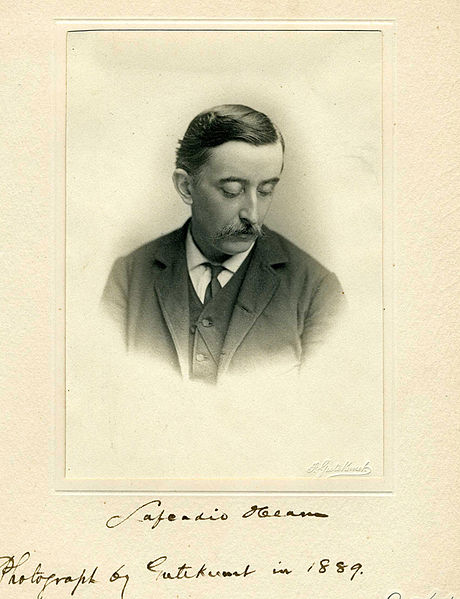
Mr Hearn and Japanese Spooky Stories


His name is Patrick Lafcadio Hearn; however, he also has a Japanese name, Yakumo Koizumi. He loved Japan, lived in Japan, and married a Japanese woman. Old Japanese folklore attracted him, and he wrote this folklore in English. He was dedicated to preserving the Japanese folklore, which would have been lost otherwise. After being educated in England, France, and the United States, he had come to Japan in 1890 where he worked as an English teacher in Shimane prefecture, which is located on the western side of Honshu Island. He also wrote many colorful, lively stories.

One of his stories is about the "Snow Woman." Mosaku and Minokichi are lumberjacks. One day, they were stranded by heavy snow and stayed overnight in a mountain cottage. During the middle of the night, a white woman's entire body appeared from nowhere and breathed on Mosaku and killed him. She approached Minokichi and told him that she would not kill him.

She asked him not to talk about her to anybody, and disappeared. Years passed. Minokichi married a beautiful, white woman whom he met on his way to his mountain. Their lives were happy and peaceful. They had a baby. One snowy day, Minokichi, watching his wife sewing beside the fireplace, remembered Snow Woman. His wife looked like her that night. Minokichi started to talk with his wife about how he had met a woman who killed his coworker, Mosaku. His wife turned pale. She told him that she was the woman who had met Minokichi and killed Mosaku in the cottage. She reminded him that she had said she would kill him if he talked about the incident to anybody. She continued to say she wanted to continue her life with him, as long as he did not tell the story. She could kill him, but she said she would not because of their baby. Minokichi apologized and asked her to stay. She told him it was too late, and disappeared. Minokichi looked for her the rest of his life, but could not find her anywhere.

Yakumo's stories are not just spooky. They bring melancholy to readers' minds. This story of Snow Woman is not at all a monster story. Snow Woman was almost given a personality and readers can feel her sorrow.

Yakumo could understand and speak Japanese, but could not write it. His wife, Setsuko, translated his stores into Japanese. Modern Japanese people can enjoy old Japanese folklore thanks to Yakumo, who was originally a foreigner in Japan. I cannot forget to mention that Yakumo's stories significantly contributed to introducing Japanese folklore to the world, since all of them were written in English


Read this Article in EzineArticles.com:

http://EzineArticles.com/5915308


It's NEW!  It's exciting!!  It brings you the result!!!  Web Traffic Toolbox!!!

http://webtraffictoolbox.com/


Please also take a look at my Traffic Solution, which is now a part of my Internet Business Toolbox.

http://thetrafficsolution.com/aff/1206


Click here to get The Traffic Solution


Check my websites to find out what I am doing:


http://vur.me/shawfunami/me

http://vur.me/shawfunami/zi


Feel free to contact me:

shaw@zhenintl.ws

Shaw Funami

Fill the Missing Link


Stumble Upon Toolbar

Sunday, September 25, 2011

Would You Rather Be a Practitioner Or a Critic?


In the scene in the movie "The Matrix" when Morpheus took Neo to see the Oracle for the first time, the Oracle showed him a proverb exhibited in a frame. The proverb stated, "Knowing the path is different from walking the path." I also believe these two things are different. When we drive somewhere for the first time, we check for directions on a map. However, the map does not warn us about snowfall in the mountains or if there is an accident that has closed the roads. This is the difference between "knowing" and "walking." Quite recently I started to see the difference between "knowing," "understanding," and "practicing."

There are a group of people who continuously study and accumulate knowledge. Another group tries to learn more and develop a deeper understanding of a subject of their choice. The difference is how the people use their knowledge and understanding. Some of them use their knowledge for criticizing others. Others use their knowledge to improve themselves. I am not talking about evaluation of who is better or superior. There are great players who are lousy coaches. There are other people, who are not very good as players and instead become prominent coaches or critics.

According to a mental health therapist, there are people who seem to be unable to stop themselves from criticizing others. According to the psychological definition, criticizing is the process of downgrading others in order to uphold the feeling of superiority. Obviously critical people have a desire to look better than others.

We see a lot of people who are always saying bad things about others. They say, "my boss is incapable," or "my wife does not understand the meaning of business," or "this movie sucks." Those people may feel better saying bad things about others. The question is, however, how others feel about the criticism they receive. Sarcastically enough, we tend not to like critical people, even though those critics feel better about themselves. Instead, we tend to like practitioners, who continue to try even though they often fail. We tend to believe that people who fail repeatedly will succeed if they continue to put in effort.

Revisiting the earlier part of this article, criticism can be made by "knowing the path." Only those who have walked the path can explain what it was like. The audience knows the difference between criticism that is either partial or opinionated. In addition, criticizing is a negative action. Negativity belongs to the dark side of our consciousness and society. We tend to admire positive actions rather than negative behavior. Next time when you are criticized, you should do what we do. Be glad to be criticized. Be glad to at least be recognized.


Read this Article in EzineArticles.com:

http://EzineArticles.com/5929133


It's NEW!  It's exciting!!  It brings you the result!!!  Web Traffic Toolbox!!!

http://webtraffictoolbox.com/


Please also take a look at my Traffic Solution, which is now a part of my Internet Business Toolbox.

http://thetrafficsolution.com/aff/1206


Click here to get The Traffic Solution


Check my websites to find out what I am doing:


http://vur.me/shawfunami/me

http://vur.me/shawfunami/zi


Feel free to contact me:

shaw@zhenintl.ws

Shaw Funami

Fill the Missing Link


Stumble Upon Toolbar

Thursday, September 22, 2011

Is the Traffic Light Red or Yellow?


The expression, "Call white black, and black white," means forcing others to accept a false definition to interpret things in one's favor. The Japanese language has exactly same expression. However, the question was if it is really white we that we see?

It was a while ago when Mr. Suzuki and his wife had an argument on running a red light. Mr. Suzuki was driving and his wife was in the passenger's seat. He saw a traffic light that just turned yellow. He sped up and passed the crossroad. His wife complained that he should not have run the red light; however, Mr. Suzuki did not agree that it was a red light. Mr. Suzuki did not mean to call white black. He believed he was a conservative driver and did not intend to break traffic laws. His wife said that at the very moment when Mr. Suzuki started to pass the crossroad, the traffic light changed to red.

The color of the traffic light that Mr. Suzuki saw was yellow. His wife interpreted it as red. Later, his wife asked if he noticed that there was a mother and a daughter waiting for a green light on the corner of the crossroad. She saw them begin to walk across the road. She said this proved that the light was already changing. Listening to his wife, Mr. Suzuki started to doubt if it was really a yellow light when he started to drive across the road.

Later, Mr. Suzuki received a traffic violation notice. He was charged for running a red light at the crossroad where he had an argument with his wife. Despite the fact that he was 100% sure the light was yellow, in the picture he received, the light was red.

As in the case of Mr. Suzuki, even in the simple judgment of a traffic light being yellow or red, our observations would be different depending on our mental influence. Mr. Suzuki wanted to drive across the road before the light turned red. That might have been his reason to see the light as being yellow. His wife worried about his driving. It might have been the reason why she saw the light as being red. The simple matter of judging color would be influenced by our emotion and thinking.

The above explains differences in people. There are people who are constantly sad, unhappy, and fearful of occurrences in their lives. Others are always resentful, angry, and upset about their experiences. In contrast, there are people who are fearless, brave, and positive even in an adverse environment. There are others who are even pleased, happy, and ambitious to face challenges. Even if one experienced happy occasions, if the person did not have a happy attitude, they would not be happy. Happiness cannot be brought to you, if you are not prepared to be happy. If one has an expectation to be unhappy, they would become unhappy.


Read this Article in EzineArticles.com:
http://EzineArticles.com/5941847


It's NEW!  It's exciting!!  It brings you the result!!!  Web Traffic Toolbox!!!

http://webtraffictoolbox.com/


Please also take a look at my Traffic Solution, which is now a part of my Internet Business Toolbox.

http://thetrafficsolution.com/aff/1206


Click here to get The Traffic Solution


Check my websites to find out what I am doing:


http://vur.me/shawfunami/me

http://vur.me/shawfunami/zi


Feel free to contact me:

shaw@zhenintl.ws

Shaw Funami

Fill the Missing Link


Stumble Upon Toolbar

Sunday, September 18, 2011

North Wind and Sun


Susan had a problem with her husband. They had been married for 15 years and had long passed their sweet time. They fought regularly. Susan did not like driving. Whenever she was with her husband, she let him drive. John did not mind driving for his wife. However, he did not like that she kept complaining about his driving. He considered himself a safe driver. He did not admit to being reckless because it was not true.

One day, the two were fighting over John's driving. Susan could not believe that he drove over 60 miles per hour on a road that changes into a highway. John argued that it was already the highway and that the speed limit is 65 miles per hour. Susan thought John should not drive at the speed of 65 miles per hour because this was a transit road from the regular road to the highway. Therefore, a driver should be extremely careful and not go over 45 miles per hour, which is the speed limit on the regular road. Both have their own reasons, and both seemed right.

A little annoyed with the repetitious arguments, Susan talked about it with her friend, Joanne, who is seven years older than Susan. Joanne asked Susan why she complained about her husband's driving behavior. She asked if Susan was afraid of an accident. Susan said she did not think it caused an accident. She has continuously said that she wanted to be safe, because she does not want anything to happen to either herself or her husband. Joanne also asked if it came from love for her husband. Susan agreed. Joanne laughed and said it was funny to fight if it was because of love. Susan thought so, too.

Susan thought about her conversation with Joanne for several days. The next time her husband drove her to the gym she had a talk with him. She said, "John, I see your driving behavior changed recently. Your driving is getting more conservative and safer. I am proud of you. I might have said too much on your driving." John was surprised by his wife's remark and did not know how to respond to it. He suddenly felt sorry about how his driving scared his wife, who was not very good at driving. He felt terrible and apologized.

Aesop's "North Wind and Sun" tells us that a harsh attitude will be countered by a harsh attitude. However, if you take a gentle approach, you will get a warm response.


Read this Article in EzineArticles.com:

http://EzineArticles.com/5958002


It's NEW!  It's exciting!!  It brings you the result!!!  Web Traffic Toolbox!!!

http://webtraffictoolbox.com/


Please also take a look at my Traffic Solution, which is now a part of my Internet Business Toolbox.

http://thetrafficsolution.com/aff/1206


Click here to get The Traffic Solution


Check my websites to find out what I am doing:


http://vur.me/shawfunami/me

http://vur.me/shawfunami/zi


Feel free to contact me:

shaw@zhenintl.ws

Shaw Funami

Fill the Missing Link


Stumble Upon Toolbar

Thursday, September 15, 2011

Is Super Natural Phenomenon a Part of Nature?


It was 1993 when the TV series "The X-files" started. The series was introduced in Japan on DVD in 1994. Japanese TV programs started to show the program in 1995. It became extremely popular and marked high viewing rates. The two movies of "The X-files" were successful worldwide. The X-files seasons and episodes vary. It includes UFO abduction, ghosts, exorcisms, and supernatural powers of people. The X-files deals with supernatural phenomenon. What is a supernatural phenomenon? What are paranormal activities? There are ghost stories all over the world. There is no country that does not have ghost stories. At the same time, there has been nobody who can prove there are ghosts.

How about religion? There is no country or ethnicity that does not have religion. I know there is a dispute about the existence of God. Agnostics do not care if there is a God. Atheists believe that they can prove that there is no God. Then where did the word God come from? Is it just I, who feels that disputing the existence of God itself, either agnostically or atheistically, at least acknowledges the concept of God, directly or indirectly?

When we think about words or concepts linguistically expressed, every language has some words that describe something that does not exist in the world where we live. I can pick some of them here. Absolute is one of them. This world consists of comparative existence. There is no absolute existence. However, human beings know the term absolute. What is the origin of the word? The other example is forever. There is nothing in this world that lasts forever. Why, and how, then did human beings acquire the term? Heaven and Hell are two of other such phrases. There has been no one who has been to either heaven or hell and returned. God and ghost are similar concepts.

Have you never had an experience when walking your dog at night where your dog reacted to something that you did not see? Have you seen your dog growling or barking at the darkness? You looked into the darkness, but you could not find anything. Although I cannot show or prove the existence of the objects that my dog was growling at, I cannot totally deny the possibility my dog was seeing something that I could not see. It would be easy to shrug it off and call our dogs too sensitive, or stupid. However, how can we conclude that they are not seeing something that we cannot see? I sometimes feel that supernatural existence is a part of nature. I cannot deny it even though I cannot prove it. Electricity was a mystery until Thomas Edison proved it. Many of these things may be proven to be a part of nature as time goes by.


Read this Article in EzineArticles.com:

http://EzineArticles.com/5957717


It's NEW!  It's exciting!!  It brings you the result!!!  Web Traffic Toolbox!!!

http://webtraffictoolbox.com/


Please also take a look at my Traffic Solution, which is now a part of my Internet Business Toolbox.

http://thetrafficsolution.com/aff/1206


Click here to get The Traffic Solution


Check my websites to find out what I am doing:


http://vur.me/shawfunami/me

http://vur.me/shawfunami/zi


Feel free to contact me:

shaw@zhenintl.ws

Shaw Funami

Fill the Missing Link


Stumble Upon Toolbar

Sunday, September 11, 2011

A Dog Named Hachi


It was a long time ago when the dog's story was publicized for the first time. It was even before World War II. Since then, every once in a while the dog is referred to in order remind people who have forgotten something important in their relationships, either with human friends or other species on earth. These things are faith and love. The dog's name is Hachi. This dog's story has been publicized in newspapers, school textbooks, TV, and magazines. In 1987, Japanese filmmakers made a movie based on the story of this dogs' life. "Story of Hachiko" was the title of the Japanese movie. The story was so good that U.S. filmmakers decided to make a U.S. version of the story. The film was released in 2007 staring Richard Gere as a professor and owner of the dog, Hachi.

This puppy was born in the northern part of Japan, Akita prefecture, Tohoku district, in 1923. A professor at Tokyo University adopted him in 1924. Professor Ueno loved dogs. He especially loved the Japanese dog breed, Akita. He had lost two Akita dogs before adopting Hachi. Professor Ueno loved Hachi. The professor took Hachi wherever he went. Hachi was a smart dog; he always remembered to walk the professor to the train station every morning. Then he would return home by himself after seeing his owner off at the station. He would then come back to the station to meet the professor returning home. This continued for about a year.

One day, while at the university, Professor Ueno had a sudden heart stroke and died. Hachi did not know his owner had died. He went to the station to meet his owner as usual. This happened more than just that first day.

He returned to the station and waited for his master to come off from the train every evening since his owner's death. His owner changed several times after the professor's death, but he did not stop going to the station to see his professor, who never came back.

A friend of the professor learned the story and decided to publish the article in a newspaper. The newspaper article struck people. Hachi became a hero dog for people in Tokyo. In 1934 his statue was built in front of Shibuya Station in Tokyo to remember the dog waiting for his owner's return. His statue was destroyed in the later stages of World War II to supplement lacking metal for the Japanese Army in the war. The statue was rebuilt and put in the same place as before in 1948. I cannot forget to mention that many U.S. children gave a donation to build his first statue despite the U.S. being in war status with Japan that time. For rebuilding his second statue, the U.S. Army General Headquarters in Tokyo took the initiative to promote the rebuilding. Many U.S. citizens, both in Japan and the U.S., gave a donation to the rebuilding.


Read this Article in EzineArticles.com:

Article Source: http://EzineArticles.com/5959928


It's NEW!  It's exciting!!  It brings you the result!!!  Web Traffic Toolbox!!!

http://webtraffictoolbox.com/


Please also take a look at my Traffic Solution, which is now a part of my Internet Business Toolbox.

http://thetrafficsolution.com/aff/1206


Click here to get The Traffic Solution


Check my websites to find out what I am doing:


http://vur.me/shawfunami/me

http://vur.me/shawfunami/zi


Feel free to contact me:

shaw@zhenintl.ws

Shaw Funami

Fill the Missing Link


Stumble Upon Toolbar